04th March 2026 | 10:00am EST / 7:00am PST / 3:00pm GMT / 4:00pm CET | Desmond G Hunt, Senior Principal Scientist at US Pharmacopeia, Laura A. Philips, PhD, MBA President and Chief Executive Officer Spheryx, Inc., Tyler Carter, PhD. Senior Application Scientist, at Yokogawa Fluid Imaging Technologies Inc |WATCH FOR FREE
Subvisible silicone oil droplets (SiOPs) originating from siliconized prefilled syringes have become a significant contributor to subvisible particulate matter (SbVP) in biopharmaceutical products. While silicone oil is essential for device functionality, dispersed droplets complicate compendial particle measurements, challenge method specificity, and may interact with therapeutic proteins. This presentation synthesizes insights from a recent Pharmacopeial Forum Stimuli article titled and “Addressing Subvisible Silicone Oil Droplets—Industry Challenges, Analytical Strategies, and USP’s Rationale for a New General Informational Chapter”.
We will examine the industry context of subvisible silicone oil droplets (SiOPs) across evolving delivery systems, including prefilled syringes and autoinjectors, and various administration routes except intravitreal use. This overview will compare analytical strategies such as light obscuration, flow imaging with morphology filters, orthogonal methods like NMR/ICP-MS and Raman/FTIR, and emerging tools such as holographic microscopy and AI-enabled image analysis, focusing on their limitations, variability, and fit-for-purpose application. Clinical and safety data will be discussed, emphasizing the low intrinsic toxicity of silicone oil and the context-dependent nature of immunogenicity risks. We will also outline development and lifecycle control strategies—covering siliconization processes, container selection, formulation factors, and manufacturing controls—and present a risk-based framework for product-specific specifications and regulatory engagement when SiOPs impact apparent SbVP levels.
Presented by Desmond G Hunt, Senior Principal Scientist at US Pharmacopeia

Dr. Desmond G. Hunt has been with USP since 2005 and holds the position of Sr. Principal Scientist in the Compendial Science Group-General Chapters. He works with the Packaging and Distribution and Dosage Forms Expert Committees, where he works to develop and revise USP Standards. He has authored many publications and peer-reviewed articles and is a frequent speaker and instructor on topics related to pharmaceutical packaging, particulate matter in parenteral and ophthalmic dosage forms, and good storage and transportation practices. He participates in several industry Working Groups and Technical Committees related to his areas of expertise. Dr. Hunt obtained his M.S. and Ph.D. from the University of Texas at Austin.
Revealing Sub-Visible Contaminants in the Presence of Silicone Oil using Total Holographic Characterization for Process Analytical Control
Silicone oil is the most common contaminant in biologic pharmaceuticals. Recent clinical studies have suggested that low levels of exposure to silicone oil does not produce immediate adverse events. However, the effects of long-term exposure to silicone oil are not yet understood. In addition, the presence of silicone oil can mask the presence of other dangerous contaminants and can instigate the formation of protein aggregates. Total Holographic Characterization (THC) is a robust and reliable method of detecting and distinguishing silicone oil droplets from other contaminants in complex biologic formulations from 500 nm – 10 mm. The region below 10 mm has garnered greater interest because problems often begin with the formation of particles in this region. Detecting particles in this region enables earlier detection and identification of contaminants for resolution of issues before they become problems.
Laura A. Philips, PhD, MBA President and Chief Executive Officer Spheryx, Inc.

Dr. Laura Philips is the co-founder, President, and CEO of Spheryx, Inc., a technology company that applies holographic microscopy techniques for analysing high-tech liquids across various industries, including pharmaceuticals and consumer products. Her diverse career spans executive leadership, board governance, and public service: She has held key executive positions, including CEO of Spheryx and WellGen, Inc., COO/CFO roles at NexGenix Pharmaceuticals and executive roles at Corning Incorporated. Dr. Philips serves on the boards of DiamiR (diagnostics) and The POGIL Project (STEM education), and previously served on boards for companies like Delcath Systems (NASDAQ:DCTH) and non-profits such as the Boyce Thompson Institute and the Guttmacher Institute. She served in the Clinton Administration as a Presidential Appointee and Fellow, and was a faculty member in the Chemistry Department at Cornell University. Dr. Philips holds a PhD in Chemistry from the University of California, Berkeley and an MBA from Cornell University. She has over 40 publications across multiple fields of study.
Differentiating Silicone Oil Droplets from Protein Aggregates: Flow Imaging Microscopy as a Quantitative, Predictive Tool
Silicone oil droplets and protein aggregates are critical quality attributes in biopharmaceutical products, particularly in prefilled syringes. Traditional compendial methods of analysis, such as light obscuration, cannot distinguish between these particle types and often undercount transparent and translucent particles. This may lead to inaccurate assessments and potential compliance challenges. Flow Imaging Microscopy (FlowCam) provides high-resolution images and morphology-based classification, enabling accurate quantitation and differentiation of silicone oil droplets from protein aggregates, even if particles are highly transparent. This orthogonal approach supports formulation development, device selection, and risk-based control strategies aligned with emerging USP guidance on silicone oil characterization.
Presented by Tyler Carter, PhD. Senior Application Scientist, at Yokogawa Fluid Imaging Technologies Inc
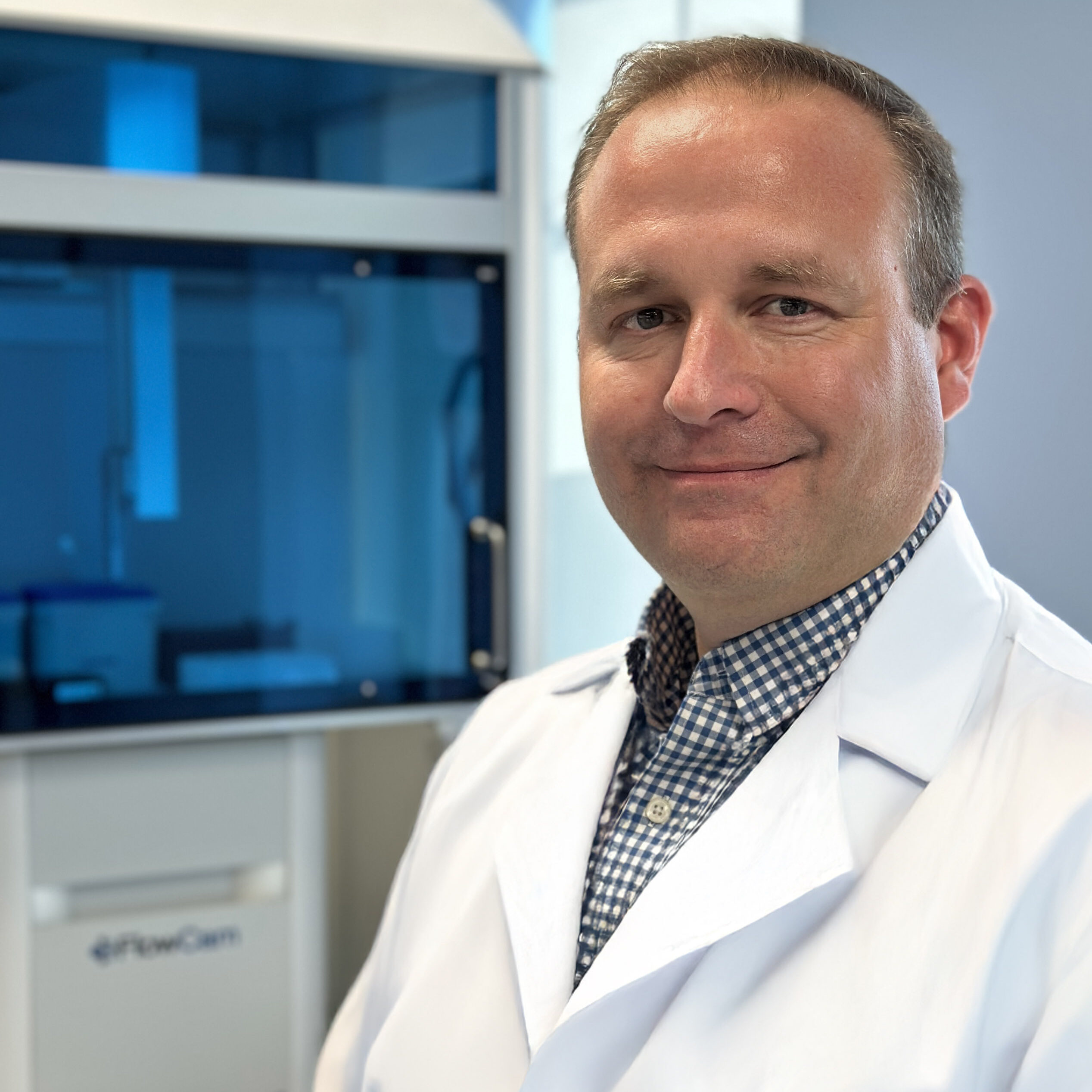
Tyler Carter is a Senior Application Scientist at Yokogawa Fluid Imaging Technologies. He received his PhD in Chemistry from the University of Massachusetts Lowell. Over his career in biopharma R&D, he has characterized various formulated modalities, including antibodies (mAbs, BsAbs, TsAbs), ADCs, Fc-fusions, enzymes, and hormones. He has also devised control and characterization strategies for innovative, difficult-to-inspect parenteral drug products, for which FlowCam LO was a core component. Currently, he is responsible for developing biopharmaceutical applications for FlowCam instruments.
Followed by a live Question and Answer session
Sponsored by Spheryx and Yokogawa Fluid Imaging Technologies Inc
About Spheryx
Spheryx, Inc. is a privately held instruments company providing Total Holographic Characterization® of colloidal materials. Spheryx’s proprietary technology uses holographic video microscopy to characterize each particle in colloidal dispersions and heterogeneous multi-component colloidal mixtures, offering unprecedented insights into sub-visible particle characteristics including size, composition, morphology and concentration in the particle’s native environment. The wealth of information encoded in particle holograms distinguishes particles that are the same size and shape down to sub-micron dimensions. Applications include R&D, quality assurance and manufacturing process control across a broad spectrum of industries, where characterization of colloids can enhance innovation, improve safety and reduce costs. Spheryx instruments are available with software that is CFR 21 Part 11 compliant for GMP applications.
About Yokogawa Fluid Imaging Technologies Inc
Yokogawa Fluid Imaging Technologies delivers advanced flow imaging microscopy solutions that empower biopharmaceutical teams to confidently characterize subvisible and submicron particles. Our flagship platform, FlowCam, provides rapid, high-resolution images that reveal particle concentration, size distribution, and detailed morphology – critical for discriminating between API aggregates and foreign contaminants. As products advance toward clinical and commercial stages, particle characterization becomes essential for meeting compendial requirements. USP chapters <787>, <788>, and <789> define particulate matter standards for parenteral products, while USP <1788> acknowledges the limitations of these methods and recommends flow imaging microscopy (FIM) as an orthogonal approach. FlowCam’s FIM technology delivers the morphological insight needed to complement light obscuration and membrane microscopy, strengthen risk-based quality decisions, and support regulatory compliance. Now part of Yokogawa Electric, we continue to drive innovation in particle analysis from our headquarters in Scarborough, Maine – helping biopharma teams generate reliable data that accelerates development and ensures product quality.
We will not sell your information to a third party. See our Privacy Policy