11th January 2027 | 9:30am EST / 6:30am PST / 2:30pm GMT / 3:30pm CET | Scott H. Altern, Senior Scientist II at AbbVie Bioresearch Center in Worcester, MA, Pia Graf, Senior Global Product Manager, Fast Trak™ Downstream Process Development at Cytiva. |BOOK FREE SEAT FOR THIS WEBINAR
Applied Automation and Mechanistic Modeling for Purification Development of Challenging Molecules under Accelerated Timelines. This talk presents a case study in the practical application of automation and mechanistic chromatography modeling in early stage (FIH) purification process development. High-throughput screening and modeling are used in conjuction to support PD and subsequent tech transfer of a cation-exchange polishing step for an mAb with high aggregate burden. Overall, the proposed workflow allowed for timeline acceleration, process improvement, and derisked tech transfer, enabling the toxicology study to support IND
Presented by Scott H. Altern, Senior Scientist II at AbbVie Bioresearch Center, Worcester, MA

Scott H. Altern is a Senior Scientist II at AbbVie Bioresearch Center in Worcester, MA, working in purification development. He graduated from Rensselaer Polytechnic Institute in 2023 with a PhD in Chemical and Biological Engineering from Prof. Steven Cramer’s group, specializing in mechanistic modeling of multimodal chromatography. Since then, Scott has driven the development and implementation of mechanistic modeling at AbbVie for both early- and late-stage biologics pipelines. His efforts have enabled multiple IND and BLA filings, enabling accelerated timelines and reduced cost of process development and process characterization for mAbs and complex multispecifics. Scott has also driven the use of high-throughput screening for process development, including its synchronous use with mechanistic modeling. Beyond modeling, he has led multiple FIH programs in process development, tech transfer, viral clearance studies, and IND authoring – demonstrating himself as a versatile contributor to both the scientific and business aspects of industrial downstream bioprocessing. In regard to scientific contributions, Scott has authored 13 publications with ~130 citations in high profile journals such as Journal of Chromatography A and Biotechnology Progress. He has presented at numerous scientific conferences, including Recovery of Biological Products, Recovery Modeling Workshop, PREP, ACS, BPI, Biotalk, and Bioprocessing Summit.
Followed by
Mechanistic Modeling as a Foundation for Adaptive Control of Antibody-drug Conjugates (ADC) Chromatography Processes
Mechanistic chromatography models are increasingly applied to accelerate process development, characterize design spaces, and improve process understanding. Their value, however, extends beyond process prediction. By quantitating the impact of process and material variability, mechanistic models can identify adaptive control strategies that maintain product quality.
What the webinar will cover
We’ll explore that potential through the purification of ADCs using hydrophobic interaction chromatography (HIC), where controlling the drug-to-antibody ratio (DAR) profile is a critical objective. Process parameters were classified as controllable or uncontrollable, and their effects on the DAR profile were investigated using a mechanistic model. The resulting analysis identified relationships between the sources of variability and process performance, and enabled the development of operating strategies to compensate. Adaptation of salt concentration and load density was shown to provide a potential route for maintaining target DAR profiles across a range of process conditions.
Key Takeaways
- Understand how mechanistic models connect sources of process variability with process performance.
- Learn how distinguishing controllable from uncontrollable parameters can inform adaptive control strategies.
- Explore why adapting salt concentration and load density offers a potential route to maintaining target DAR profiles under varying process conditions.
Why join?
If you are developing chromatography processes or exploring model-informed control, this webinar offers a case-based perspective on extending mechanistic modeling beyond prediction to identify adjustments that could help maintain product quality.
Join us to explore how deeper process understanding can lay the foundation for adaptive control, with ADC purification as a practical example.
Presented by Pia Graf, Senior Global Product Manager, Fast Trak™ Downstream Process Development at Cytiva.
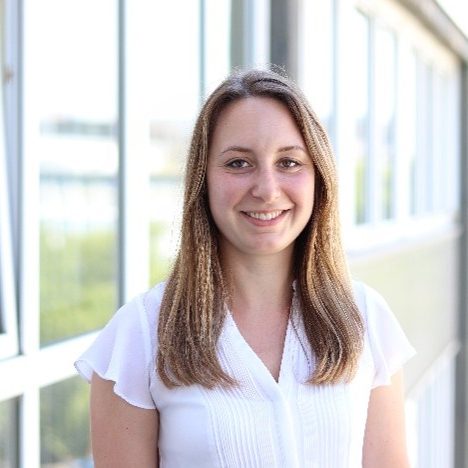
Pia Graf is Senior Global Product Manager for Fast Trak™ downstream process development at Cytiva. Her portfolio includes GoSilico™ chromatography modeling software. Prior to moving into product management, she spent more than five years as a Mechanistic Modeling Specialist, providing scientific and technical support. Her background combines deep expertise in mechanistic chromatography modeling and biopharmaceutical process development with a strategic perspective on how digital and in-silico technologies can be translated into impactful solutions for downstream processing.
Followed by a live question and answer session
Sponsored by Cytiva
At Cytiva, we envision a world in which access to life-changing therapies transforms human health. With a rich heritage dating back hundreds of years, our wealth of technical expertise and talent, a broad and deep portfolio, and exceptional service help researchers and biopharma advance therapeutics at every stage from discovery to delivery.
Cytiva is proud to be part of Danaher. Danaher is a global life sciences and diagnostics innovator committed to accelerating the power of science and technology to improve human health. Together, we partner with customers to solve their toughest challenges—with speed and certainty.
We will not sell your information to a third party. See our Privacy Policy