09th November 2026 | 9:30am EST / 6:30am PST / 2:30pm GMT / 3:30pm CET | Dr. Anthony Blaszczyk, Principal Scientist in the Global Biologics Department at U.S. Pharmacopeia, Mateusz Imiolek, Principal Scientist at Waters |BOOK FREE SEAT FOR THIS WEBINAR
Plasmid DNA is a fundamental starting material for cell and gene therapy products, where quality attributes, such as topology, directly impact production. DNA topology measures the distribution of DNA isoforms, including supercoiled, open circular, linear, and other isoforms. Common analytical methods for topology assessment include agarose gel electrophoresis (AGE), capillary electrophoresis with laser-induced fluorescence (CE-LIF), and anion exchange chromatography (AEX). Topology assessment remains challenging due to method-dependent bias, limited harmonization, and a lack of well-characterized reference materials.
The United States Pharmacopeia (USP) has developed plasmid DNA analytical reference materials to assist in the characterization of plasmid DNA. These reference materials range in size from 4.1 kb – 8.8 kb to align with the different plasmid sizes used during production. The plasmids were predominantly supercoiled but also contained other isoforms to capture capabilities of each analytical method. Herein, we will share data from a multi-laboratory study and highlight differences between the three techniques.
These reference materials provide a standardized tool for improving topology assessment, supporting method development, qualification, and cross-platform comparability. Combined with USP documentary standards, they help enable more consistent and reliable testing practices, advancing the overall quality and characterization of plasmid DNA used in therapeutic manufacturing.
Presented by Dr. Anthony Blaszczyk, Principal Scientist in the Global Biologics Department at U.S. Pharmacopeia

Dr. Anthony Blaszczyk is a Principal Scientist in the Global Biologics Department at U.S. Pharmacopeia (USP), where he leads initiatives within the Pipeline Development group to advance standards for Cell and Gene Therapy (CGT). His work focuses on the development of both documentary and physical standards that support product quality and innovation. He plays a pivotal role in USP’s efforts to meet evolving industry needs through collaboration with scientific experts and stakeholders across the biopharmaceutical sector. Prior to joining USP, Anthony earned his Ph.D. in Biochemistry from Penn State University. He previously managed an Analytical Development team at Catalent’s Gaithersburg and Rockville sites, where he specialized in method development, qualification, and method transfer to support AAV-based gene therapy production.
Followed by Mateusz Imiolek, Principal Scientist at Waters
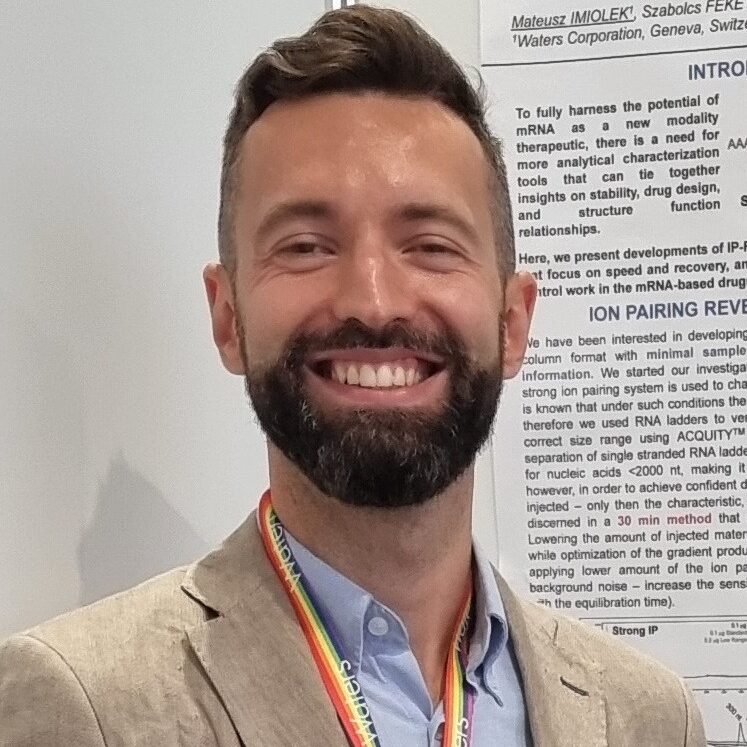
Mateusz is a Principal Scientist at Waters, where he develops analytical approaches for the characterization of gene therapeutics. Since joining Waters in 2022, he has focused on advancing LC-based methods for separations nucleic acids, working in close collaboration with the Institute of Pharmaceutical Sciences of Western Switzerland. He holds a PhD from the University of Oxford and pursued postdoctoral research at the University of Geneva, building interdisciplinary expertise at the interface of biophysics and bioorganic chemistry. His scientific contributions include more than 20 co-authored publications and application notes, as well as a book chapter in the field of analytical chemistry. He has extensive expertise in applying a range of chromatographic techniques, including size-exclusion, anion-exchange, and reversed-phase chromatography, to the separation and characterization of complex biomolecules.
Followed by a live question and answer session
Sponsored by Waters Corporation

Waters Corporation is a global leader in analytical chemistry, providing chromatography, mass spectrometry, and laboratory informatics solutions that help scientists characterize complex molecules and accelerate therapeutic development. Headquartered in Milford, Massachusetts, Waters supports pharmaceutical, biopharmaceutical, academic, and industrial laboratories worldwide. As will be specifically focused on within this webinar, Waters advanced anion-exchange (AEX) columns and standards enable high-resolution analysis of gene therapeutics, including viral vectors and nucleic acids, helping researchers improve analytical confidence throughout development and manufacturing.
We will not sell your information to a third party. See our Privacy Policy